
- Home >
- News >
- Industry-news > Advantages of Liquid Cooling for Data Ce…
Advantages of Liquid Cooling for Data Centers
Compared to traditional air cooling, liquid cooling offers the following five key advantages:
1. Extremely High Heat Dissipation Efficiency and Support for High Power Density
· Physical property advantage: Liquids have much higher specific heat capacity and thermal conductivity than air (e.g., water’s thermal conductivity is about 20–30 times that of air). This allows liquid cooling to remove high heat loads from chips more efficiently.
· Support for high-power chips: As AI GPUs (e.g., NVIDIA H100/B200) exceed 500W or even 700W per chip, traditional air cooling is approaching its physical limits. Liquid cooling, especially immersion cooling, can easily support rack power density from the conventional 6–8 kW up to 50 kW, 100 kW, or more, meeting the demands of high-density computing.
2. Significant Energy Savings (Lower PUE)
· Reduced fan power: Liquid cooling systems, particularly immersion types, require few or even no high-speed server fans, greatly reducing IT power consumption.
· Less reliance on mechanical cooling: Liquid cooling allows longer use of free cooling – chillers may not be needed even in summer, using only cooling towers or dry coolers for heat rejection.
· Optimized PUE: Traditional data centers operate at a PUE of 1.4–1.6, whereas liquid-cooled facilities can easily achieve PUE below 1.1, often approaching 1.05 – aligning with carbon‑reduction strategies and green data center requirements.
3. Space Saving and Improved Land Utilization
· Higher density deployment: Higher cooling efficiency allows more servers per rack.
· Elimination of raised floors: Many liquid cooling solutions (e.g., cold plate or immersion) no longer require complex raised-floor air distribution, simplifying data center construction and increasing computing output per unit floor area. This yields higher ROI in land-constrained metropolitan areas.
4. Noise Reduction and Improved Operation & Maintenance Environment
· Quiet operation: Traditional server rooms often operate at 80–90 dBA due to high-speed fans, requiring hearing protection. Liquid‑cooled rooms, especially immersion‑based, virtually eliminate fan noise, greatly improving the working environment.
· Dust and corrosion prevention: In immersion cooling, servers are fully enclosed in dielectric fluid, isolating them from dust and corrosive contaminants – significantly enhancing hardware reliability and service life.
5. High Potential for Waste Heat Recovery
· High‑grade heat source: Liquid cooling systems reject warm water at relatively high temperatures (45°C–60°C or higher), which is far more usable than the low‑temperature exhaust air from air‑cooled systems.
· Application scenarios: Recovered heat can be directly used for building heating, domestic hot water, or agricultural greenhouse heating – further reducing total operating costs and achieving energy recycling.
No next
CASE
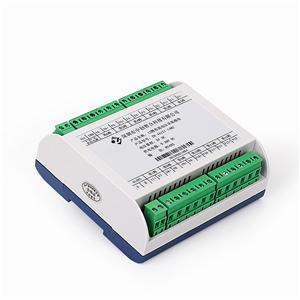
12-Channel Fully Isolated DC Voltage Current Data Acquisition Module
ZH-34123,12-channel fully isolated acquisition module, 1kHz sampling rate data logger, real-time output DAQ module, channel-to-channel isolation, high-speed analog input module, industrial measurement module
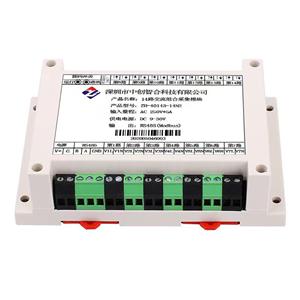
14-Channel AC Voltage Current Data Acquisition Module
ZH-40143 14-Channel AC Voltage and Current Data Acquisition Module,with full isolation, RS485 output, and 20ms-1000ms adjustable sampling speed
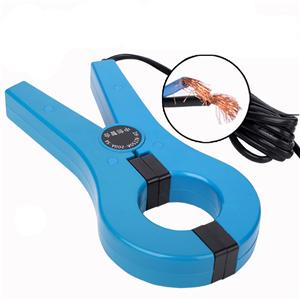
50MM Split Core Clamp-On Current Transformer
ZH-KCT50A Clamp-On Current Transformer
Contact Us
| Phone: | 8613450868908 |
|---|---|
| Email: | maggie@jshelectronic.com |
| Address: | JSH2026 |