
- Home > How to Monitor String Current in Solar P…
How to Monitor String Current in Solar PV Systems
As solar photovoltaic (PV) installations continue to expand in utility-scale, commercial, and industrial applications, ensuring optimal performance has become increasingly important. One of the most effective ways to improve system reliability and maximize energy yield is through string current monitoring.
By continuously measuring the current of each PV string, operators can quickly identify faults, detect performance degradation, and improve maintenance efficiency.
This article explains why string current monitoring is important, common monitoring methods, and how data acquisition modules can be used to build a reliable solar monitoring solution.
A solar PV system typically consists of multiple PV strings connected in parallel within a combiner box.
Each string generates a DC current proportional to:
Solar irradiance
Panel efficiency
Temperature
Module condition
Cable integrity
String current monitoring involves measuring the current flowing through each individual PV string and transmitting the data to a monitoring platform for analysis.
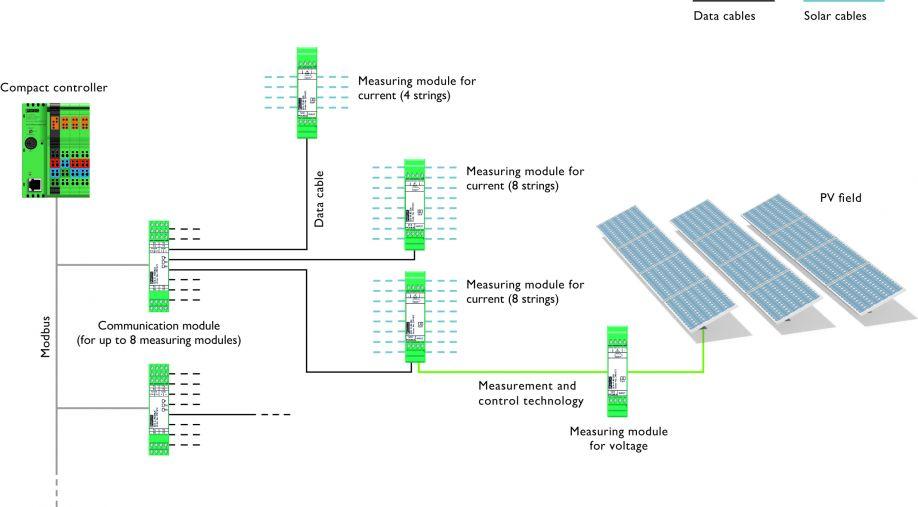
Typical Solar PV Monitoring Architecture
Why Is String Current Monitoring Important?
Early Fault Detection
Monitoring individual string currents allows operators to identify issues such as:
Open circuits
Loose connectors
Broken fuses
Damaged cables
Module failures
A sudden drop in current usually indicates a fault that requires immediate attention.
Detecting Module Degradation
Over time, solar modules may suffer from:
PID (Potential Induced Degradation)
Hot spots
Cell cracks
Aging
Comparing currents between parallel strings helps detect underperforming modules before significant power loss occurs.
Improving Energy Yield
Studies show that unnoticed string failures can reduce annual energy production by several percent.
Real-time monitoring enables maintenance teams to:
Locate faults quickly
Reduce downtime
Increase plant availability
Improve return on investment (ROI)
Instead of inspecting thousands of modules manually, operators can use monitoring data to pinpoint the exact string requiring service.
This significantly reduces:
Labor costs
Inspection time
O&M expenses
Method 1: Hall Effect Current Sensors
Hall-effect sensors measure magnetic fields generated by DC current.
Advantages:
Non-contact measurement
Suitable for DC applications
Electrical isolation
High reliability
Applications:
Solar combiner boxes
Battery storage systems
DC distribution systems
DC current transducers convert measured current into:
0-5V
0-10V
4-20mA
RS485 Modbus signals
Advantages:
Long-distance transmission
High accuracy
Easy PLC integration
Applications:
SCADA systems
Energy management systems
Industrial automation
For large solar installations with many strings, multi-channel acquisition modules provide the most efficient solution.
Typical features include:
8-channel
16-channel
24-channel
32-channel current inputs
Benefits:
Reduced wiring
Centralized monitoring
Real-time data collection
Easy network integration
A typical solar string current monitoring solution includes:
Field Layer
Current sensors
DC current transducers
Combiner boxes
Acquisition Layer
Multi-channel DC current acquisition modules
RS485 communication network
Control Layer
PLC
Data logger
Gateway
Monitoring Layer
SCADA software
Cloud monitoring platform
Energy management system
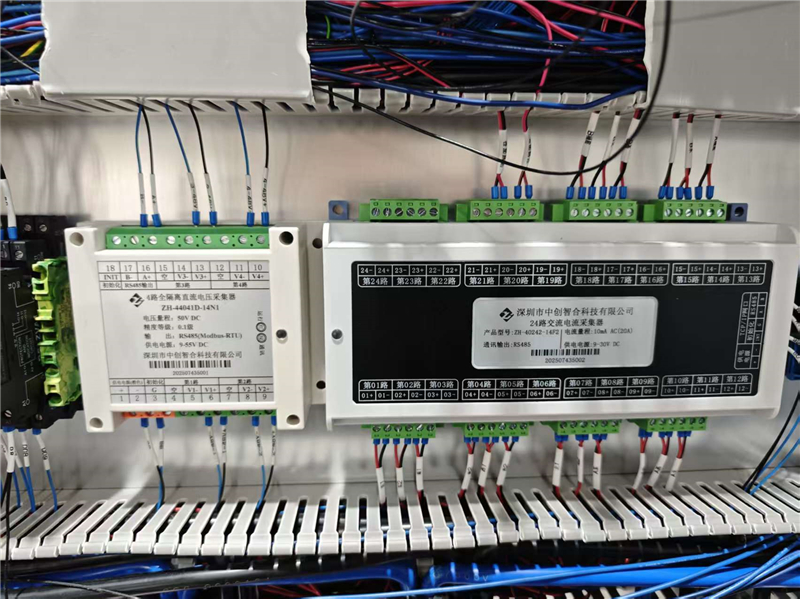
System Architecture
Key Parameters to Monitor
For effective solar PV monitoring, operators should collect:
Benefits of Using RS485 Data Acquisition Modules
Parameter
Purpose
String Current
Detect faults and imbalance
String Voltage
Verify operating conditions
Power Output
Performance evaluation
Irradiance
Production comparison
Module Temperature
Efficiency analysis
Combiner Box Temperature
Safety monitoring
Alarm Status
Event management
High Channel Density
Monitor multiple PV strings using a single module.
Long Communication Distance
RS485 communication can reach:
Up to 1200 meters
Strong anti-interference capability
Compatible with:
Modbus RTU
PLC systems
SCADA platforms
Industrial gateways
Fewer cables and centralized data collection reduce project costs.
Applications
String current monitoring is widely used in:
Utility-Scale Solar Farms
Monitor hundreds or thousands of PV strings.
Commercial Rooftop Solar Systems
Improve maintenance efficiency and reduce downtime.
Industrial Solar Installations
Support energy management and production optimization.
Solar + Energy Storage Projects
Provide complete DC-side monitoring solutions.
Choosing the Right String Current Monitoring Solution
When selecting a monitoring system, consider:
Number of PV strings
Current range
Measurement accuracy
Communication protocol
Environmental conditions
Expansion requirements
For large-scale projects, multi-channel current acquisition modules with RS485 Modbus communication are often the preferred choice due to their scalability and ease of integration.
Conclusion
String current monitoring is a critical component of modern solar PV systems. By continuously measuring the current of each PV string, operators can quickly detect faults, improve energy production, reduce maintenance costs, and maximize system reliability.
Whether for commercial rooftops or utility-scale solar farms, deploying a reliable current monitoring solution based on current sensors and multi-channel acquisition modules provides the visibility needed to ensure long-term PV system performance.
FAQ
1.Why monitor individual PV string currents?
Individual string monitoring helps detect faults, identify underperforming modules, and improve overall system efficiency.
2.What is the best way to measure DC string current?
Hall-effect current sensors and multi-channel DC current acquisition modules are widely used due to their accuracy, isolation, and easy integration.
3.Can RS485 be used in solar monitoring systems?
Yes. RS485 Modbus RTU is one of the most common communication methods in solar monitoring because of its long-distance transmission and strong anti-interference performance.
4.How many strings can one acquisition module monitor?
Depending on the model, acquisition modules can support 8, 16, 24, 32, or more current input channels.
CATALOG
-
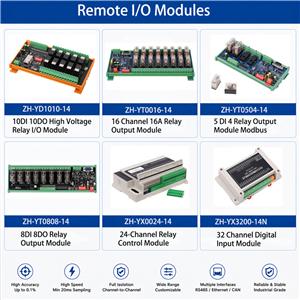
Remote IO Modules Catalog
Industrial IO Modules provide reliable signal acquisition and control so
-
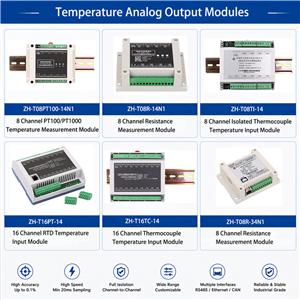
Temperature Analog Output Modules Catalog
High-performance temperature analog output modules for RTD and thermocou
-
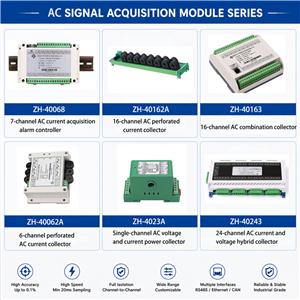
AC Signal Acquisition Modules Voltage Current Monitoring
AC signal acquisition modules for voltage, current, power, energy, and f
ARTICLES
- AC/DC Universal Data Acquisition Module: A Reliable Solution for Data Center Load Aging Testing
- DC Current Monitoring for Solar Combiner Boxes | PV String Current Monitoring Solution
- Current Monitoring Solutions for PV Power Plants
- How to Choose a Data Acquisition Module
- RS485 Modbus Data Acquisition Guide
Contact Us
| Contact: | Maggie Xian |
|---|---|
| Phone: | 8613450868908 |
| Email: | maggie@jshelectronic.com |
| Address: | Plant No. 2, Lijincheng Science and Technology Park, Jihua Road, Longhua Street, Longhua District, Shenzhen City, Guangdong Province |