
RS485 Modbus Data Acquisition Guide
Modern industrial automation relies on accurate and reliable data collection. Whether monitoring electrical parameters, temperature, pressure, current, or environmental conditions, an efficient communication network is essential.
Among all industrial communication protocols, RS485 combined with Modbus RTU has become one of the most widely adopted standards because of its simplicity, reliability, long transmission distance, and compatibility with thousands of industrial devices.
This guide explains how RS485 Modbus data acquisition works, its advantages, common applications, and how to select the right data acquisition module for your project.
What Is RS485?
RS485 is an industrial serial communication standard designed for reliable long-distance communication in electrically noisy environments.
Compared with RS232, RS485 offers several advantages:
*Long communication distance (up to 1200 meters)
*Multi-device networking (up to 32 standard devices, more with modern transceivers)
*Excellent anti-interference capability
*Low wiring cost
*High reliability for industrial environments
*Differential signal transmission
Because of these characteristics, RS485 is widely used in factories, substations, renewable energy systems, building automation, and smart manufacturing.
What Is Modbus RTU?
Modbus RTU is one of the world's most widely used industrial communication protocols.
It allows a master device, such as a PLC, SCADA system, HMI, industrial PC, or gateway, to communicate with multiple slave devices over the same RS485 network.
Typical slave devices include:
*Data acquisition modules
*Temperature transmitters
*Power meters
*Energy meters
*IO modules
*Current monitoring modules
*Analog input modules
*Environmental sensors
The protocol is open, easy to implement, and supported by almost every major PLC manufacturer.
How RS485 Modbus Data Acquisition Works
A typical RS485 data acquisition system consists of several components:
Sensors
│
▼
RS485 Data Acquisition Module
│
▼
RS485 Bus
│
▼
PLC / HMI / SCADA / IPC
│
▼
Database / Cloud Platform / MES
The data acquisition module converts sensor signals into digital Modbus registers.
The master controller periodically polls each module to obtain real-time measurements for monitoring, analysis, alarms, and data logging.
Why Use RS485 Data Acquisition Modules?
Compared with traditional analog wiring, RS485 modules provide significant advantages.
1. Long-Distance Communication
Communication distances can reach approximately 1200 meters without repeaters, making RS485 ideal for factories, power stations, and large buildings.
2. Reduced Wiring Costs
Multiple acquisition modules can share one communication bus, greatly reducing cable requirements.
3. High Reliability
Differential signaling minimizes the effects of electromagnetic interference, ensuring stable communication in industrial environments.
4. Easy Expansion
Additional modules can be added without redesigning the entire system.
5. Standard Protocol
Modbus RTU ensures compatibility with PLCs, HMIs, SCADA software, industrial PCs, and IoT gateways.
Typical Data Acquisition Signals
Modern RS485 acquisition modules support various signal types, including:
Typical Applications
Signal Type
Typical Sensors
Voltage
0–10V, ±10V
Current
4–20mA, 0–20mA
AC Current
Current Transformer (CT)
DC Current
Hall Current Sensor
Temperature
PT100, PT1000, Thermocouple
Humidity
Environmental Sensors
Pressure
Pressure Transmitters
Frequency
Electrical Systems
Digital Input
Switches,Relays
Relay Output
Alarm Control
Monitor production equipment, motors, conveyors, pumps, and control cabinets.
2.Energy Monitoring
Collect voltage, current, power, energy consumption, and power quality data for energy management systems.
3.Solar PV Systems
Monitor:String current,Combiner boxes,Inverters,Environmental parameters,Battery storage systems,
4.Building Automation
Connect HVAC systems, lighting controllers, energy meters, and environmental sensors through a unified RS485 network.5.Water Treatment
Acquire pressure, flow, liquid level, pH, and pump status for centralized monitoring.
6.Smart Manufacturing
Integrate production equipment into MES and ERP systems through industrial gateways.
Choosing the Right RS485 Data Acquisition Module
When selecting a module, consider the following factors:
1.Number of Input Channels
Choose modules with 4, 8, 16, or 32 channels according to your application.
2.Signal Type
Confirm compatibility with:Voltage,Current,Temperature,Digital IO,Power measurement
3.Communication Protocol
Select standard Modbus RTU for maximum compatibility.4.Isolation Protection
Industrial-grade isolation improves system stability and protects equipment from electrical noise.
5.Measurement Accuracy
Higher-resolution ADCs provide more accurate and stable measurements for demanding applications.
6.Power Supply
Choose a suitable supply voltage, such as:10–30 VDC,24 VDC,48 VDC,85–265 VAC/DC
Follow these recommendations to improve communication reliability:
*Use twisted-pair shielded cable.
*Keep A and B wiring consistent throughout the network.
*Terminate both ends of long communication lines with 120 Ω resistors when appropriate.
*Avoid star-topology wiring on long buses.
*Separate communication cables from high-voltage power lines.
*Properly ground the shield at one end to reduce interference.
*Assign unique Modbus addresses to each device.
FAQ
1.What is the maximum RS485 communication distance?The standard maximum distance is approximately 1200 meters, depending on cable quality, baud rate, and network conditions.
2.Can multiple devices share one RS485 bus?
Yes. Multiple Modbus RTU slave devices can communicate on the same RS485 network when each device has a unique address.
3.Is RS485 suitable for outdoor installations?
Yes. With proper surge protection, shielding, and waterproof enclosures, RS485 is widely used in outdoor applications such as solar power plants and environmental monitoring.
4.What industries use RS485 data acquisition?
Common industries include:
*Industrial automation
*Renewable energy
*Smart buildings
*Electrical power systems
*Water treatment
*Manufacturing
*Oil & gas
*Transportation
Conclusion
RS485 Modbus remains one of the most reliable and cost-effective communication standards for industrial data acquisition. Its long communication distance, excellent noise immunity, flexible networking capability, and broad compatibility make it the preferred choice for automation, energy monitoring, and IoT applications.
Whether you need to monitor electrical parameters, temperature, current, or process variables, selecting the right RS485 Modbus data acquisition module ensures stable operation, accurate measurements, and easy system integration.
Pls check our website:https://www.jshelectronic.com/
CATALOG
-
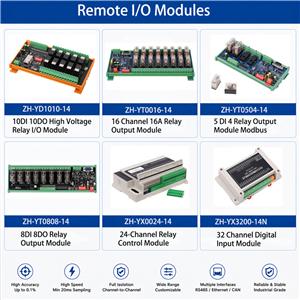
Remote IO Modules Catalog
Industrial IO Modules provide reliable signal acquisition and control so
-
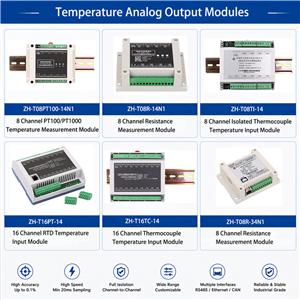
Temperature Analog Output Modules Catalog
High-performance temperature analog output modules for RTD and thermocou
-
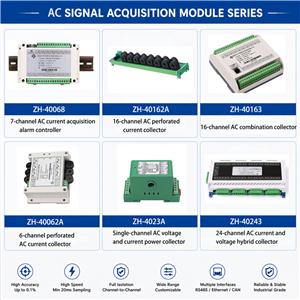
AC Signal Acquisition Modules Voltage Current Monitoring
AC signal acquisition modules for voltage, current, power, energy, and f
ARTICLES
- AC/DC Universal Data Acquisition Module: A Reliable Solution for Data Center Load Aging Testing
- DC Current Monitoring for Solar Combiner Boxes | PV String Current Monitoring Solution
- Current Monitoring Solutions for PV Power Plants
- How to Choose a Data Acquisition Module
- RS485 Modbus Data Acquisition Guide
Contact Us
| Contact: | Maggie Xian |
|---|---|
| Phone: | 8613450868908 |
| Email: | maggie@jshelectronic.com |
| Address: | Plant No. 2, Lijincheng Science and Technology Park, Jihua Road, Longhua Street, Longhua District, Shenzhen City, Guangdong Province |