
How to Choose a Data Acquisition Module
Selecting the right Data Acquisition Module (DAQ Module) is critical for building a reliable industrial monitoring system. Whether you're monitoring electrical parameters, collecting sensor signals, supervising photovoltaic systems, or integrating with PLCs and SCADA software, choosing the proper module directly impacts system accuracy, scalability, and maintenance costs.
This guide explains the key factors engineers and purchasing professionals should consider before selecting a data acquisition module.
What Is a Data Acquisition Module?
A Data Acquisition Module (DAQ Module) is an industrial device that converts physical signals from sensors or equipment into digital data that can be transmitted to monitoring software, PLCs, HMIs, or cloud platforms.
Typical input signals include:DC Voltage,AC Voltage,DC Current,AC Current,Temperature,Resistance,Frequency,Pulse,Digital Input,Relay Output
The collected data is usually transmitted through communication interfaces such as:RS485,RS232,Ethernet,Modbus RTU,Modbus TCP
1. Determine What Signals Need to Be Collected
The first step is identifying the type of signal your application requires.
Different applications require different acquisition hardware. Selecting the wrong input type can reduce measurement accuracy or require additional signal converters.
Signal Type
Typical Application
DC Voltage
Battery systems,solar PV
AC Voltage
Power distribution
DC Current
Battery monitoring,PV strings
AC Current
Motors, industrial equipment
Temperature
HVAC, furnaces, transformers
Resistance
PT100/PT1000 sensors
Digital Input
Switch status monitoring
Relay Output
Equipment control
2. Choose the Required Number of Channels
Industrial projects vary greatly in scale.
Typical options include:1 Channels,4 Channels,8 Channels,16 Channels,24 Channels,32 Channels
For future expansion, engineers often select modules with additional spare channels to avoid replacing equipment later.
3. Consider Measurement Accuracy
Accuracy requirements depend on the application.
Examples:
Higher accuracy generally increases system cost, so selecting the appropriate level for the project is essential.
Application
Recommended Accuracy
Environmental Monitoring
±0.5%
Factory Automation
±0.2%
Energy Metering
±0.1%
Laboratory Testing
±0.05%
4. Select the Appropriate Communication Interface
Communication determines how the DAQ module integrates with the rest of the automation system.
RS485
Advantages:
*Long communication distance
*Excellent noise immunity
*Low installation cost
*Widely used in industrial environments
Suitable for:
*PLC systems
*Factory automation
*Distributed monitoring
Ethernet
Advantages:
*High-speed communication
*Easy network integration
*Remote monitoring
*Cloud connectivity
Suitable for:
*Industrial IoT
*SCADA systems
*Energy management platforms
5. Ensure Protocol Compatibility
Most industrial systems rely on standardized communication protocols.
The most common include:Modbus RTU,Modbus TCP,MQTT (IoT applications),OPC UA,Custom protocols
Choosing a module that supports standard Modbus communication greatly simplifies system integration.
6. Consider Environmental Conditions
Industrial environments can be challenging.
Before purchasing, evaluate:
*Operating temperature
*Humidity
*EMC performance
*Isolation voltage
*Vibration resistance
*Dust protection
*Surge protection
Modules used in substations, photovoltaic plants, and manufacturing facilities should provide industrial-grade protection.
7. Check Isolation and Safety Features
Electrical isolation protects both equipment and operators.
Important features include:
*Optical isolation
*Power isolation
*Channel isolation
*Anti-interference design
*Lightning protection
*Over-voltage protection
Isolation becomes especially important when monitoring multiple high-voltage circuits simultaneously.
As projects grow, monitoring requirements often increase.
Look for modules that support:
*Multiple devices on one RS485 bus
*Daisy-chain networking
*Ethernet networking
*Expansion through additional I/O modules
*Easy integration with SCADA systems
Scalable hardware helps reduce future upgrade costs.
9. Verify Software Compatibility
Industrial data acquisition modules should integrate easily with:
*PLCs
*SCADA software
*HMIs
*Energy Management Systems (EMS)
*Building Management Systems (BMS)
*Industrial IoT platforms
Modules supporting Modbus RTU or Modbus TCP are generally compatible with most industrial software platforms.
10. Consider Long-Term Reliability
Industrial equipment often operates continuously for years.
When evaluating manufacturers, consider:
*Product quality
*Manufacturing experience
*Quality control procedures
*Technical documentation
*Firmware updates
*Technical support
*OEM/ODM capability
Reliable suppliers reduce maintenance costs and improve system uptime.
Typical Applications
Data acquisition modules are widely used in various industries:
1.Solar PV Monitoring
*PV string current monitoring
*Combiner box monitoring
*Inverter monitoring
*DC power measurement
*Electrical parameter monitoring
*Distribution cabinet monitoring
*Generator monitoring
*Transformer monitoring
PLC signal acquisition
Machine status monitoring
Process control
Equipment diagnostics
*Temperature monitoring
*Humidity monitoring
*Water treatment systems
*HVAC systems
5.Smart Buildings
*Energy management*Lighting control
*Building automation
*HVAC optimization
Avoid these common selection errors:
*Choosing insufficient input channels
*Ignoring communication compatibility
*Overlooking isolation requirements
*Selecting laboratory equipment for industrial environments
*Failing to consider future system expansion
*Ignoring environmental protection ratings
Planning ahead can significantly reduce installation and maintenance costs.
Conclusion
Choosing the right data acquisition module requires balancing signal type, communication method, accuracy, scalability, and environmental requirements.
For industrial automation, power monitoring, renewable energy, and smart manufacturing applications, selecting an industrial-grade DAQ module with reliable communication, robust isolation, and flexible expansion capabilities ensures long-term performance and system reliability.
Whether your project involves monitoring voltage, current, temperature, digital signals, or power consumption, investing time in selecting the appropriate data acquisition hardware will improve operational efficiency and reduce future maintenance costs.
FAQ
1.What is the difference between a PLC I/O module and a data acquisition module?
A PLC I/O module is designed primarily for machine control, while a data acquisition module focuses on collecting, converting, and transmitting measurement data to monitoring or control systems.
2.Which communication interface is better: RS485 or Ethernet?
RS485 is ideal for long-distance industrial communication with excellent noise immunity, while Ethernet offers higher bandwidth, easier networking, and remote connectivity for Industrial IoT applications.
3.Can one data acquisition module measure both voltage and current?
Some multifunction DAQ modules support multiple signal types, while others are designed specifically for voltage, current, temperature, or digital inputs. Always verify the supported input types before purchasing.
4.Why is channel isolation important?
Isolation prevents electrical interference between channels, improves measurement accuracy, and protects connected equipment from voltage surges or ground loops.
Pls check our website for reference:
CATALOG
-
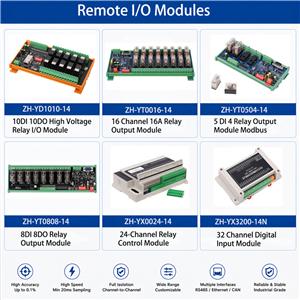
Remote IO Modules Catalog
Industrial IO Modules provide reliable signal acquisition and control so
-
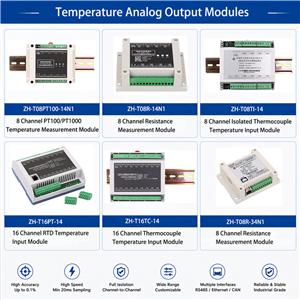
Temperature Analog Output Modules Catalog
High-performance temperature analog output modules for RTD and thermocou
-
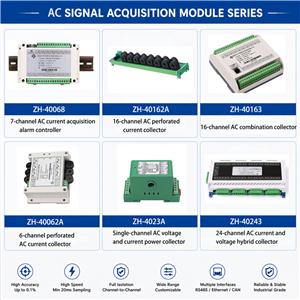
AC Signal Acquisition Modules Voltage Current Monitoring
AC signal acquisition modules for voltage, current, power, energy, and f
ARTICLES
- AC/DC Universal Data Acquisition Module: A Reliable Solution for Data Center Load Aging Testing
- DC Current Monitoring for Solar Combiner Boxes | PV String Current Monitoring Solution
- Current Monitoring Solutions for PV Power Plants
- How to Choose a Data Acquisition Module
- RS485 Modbus Data Acquisition Guide
Contact Us
| Contact: | Maggie Xian |
|---|---|
| Phone: | 8613450868908 |
| Email: | maggie@jshelectronic.com |
| Address: | Plant No. 2, Lijincheng Science and Technology Park, Jihua Road, Longhua Street, Longhua District, Shenzhen City, Guangdong Province |