
Current Monitoring Solutions for PV Power Plants
Description
As photovoltaic (PV) power plants continue to increase in capacity worldwide, efficient monitoring has become essential for maximizing energy production and minimizing maintenance costs. While inverter-level monitoring provides an overview of system performance, it often cannot identify underperforming strings or localized faults.
A professional current monitoring solution enables operators to monitor each PV string or combiner box in real time, providing early fault detection, improved operational efficiency, and higher return on investment.
Whether managing a commercial rooftop installation or a utility-scale solar farm, accurate DC current monitoring is one of the most effective ways to maintain optimal system performance.
Why Current Monitoring Matters in Solar Power Plants
Every PV string contributes to the total output of a solar power plant. Even a single abnormal string can reduce the overall energy yield.
Without continuous current monitoring, problems such as the following may remain unnoticed for weeks or months:
*Broken PV strings
*Loose connectors
*Damaged fuses
*Module degradation
*Partial shading
*Soiling accumulation
*PID (Potential Induced Degradation)
*Connector overheating
*Cable aging
Real-time monitoring allows maintenance personnel to identify issues immediately before they significantly affect energy production.
Typical PV Current Monitoring Architecture
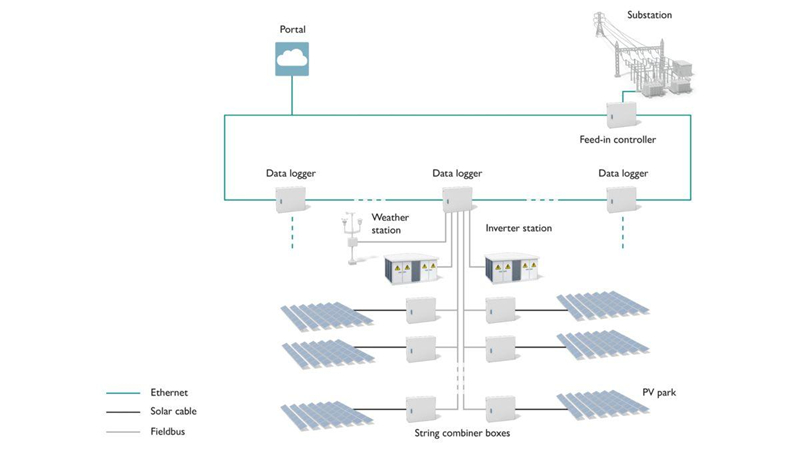
A typical monitoring system consists of:
PV Modules
Generate DC electricity from sunlight.
↓
PV Strings
Multiple solar panels connected in series.
↓
Combiner Box
Multiple strings are combined through protection devices.
↓
Multi-Channel Current Monitoring Module
Measures:
Individual string current
Voltage (optional)
Temperature (optional)
Digital status inputs
↓
Communication Network
Supports:
RS485 Modbus RTU
Ethernet Modbus TCP
CAN Bus (optional)
↓
SCADA / EMS / PLC
Real-time visualization, alarms, historical data storage, and performance analysis.
Key Functions of a PV Current Monitoring Solution
Each string current is measured independently.
Typical measurement ranges include:
0–20A
0–50A
0–100A
0–200A
Customized ranges available
High-resolution acquisition enables accurate comparison between strings.
2. Early Fault Detection
The monitoring system immediately identifies:
Open circuits
Reverse current
Fuse failure
Current imbalance
Abnormal string output
Sudden production loss
Automatic alarms reduce inspection time dramatically.
3. Performance Comparison Between Strings
Operators can compare:
Current deviation
Daily energy contribution
Historical trends
Seasonal performance
This quickly identifies underperforming strings.
4. Predictive Maintenance
Continuous monitoring enables predictive maintenance rather than reactive repairs.
Benefits include:
Reduced field inspections
Lower maintenance costs
Faster troubleshooting
Extended equipment life
5.Remote Monitoring
Current data can be transmitted to:SCADA systems
PLC controllers
Energy Management Systems (EMS)
Cloud platforms
Industrial IoT gateways
Remote monitoring enables centralized management of multiple solar plants.
Common Applications
A professional current monitoring solution is suitable for:
Utility-Scale Solar Farms
Monitor thousands of strings across multiple inverter stations.
Commercial & Industrial Rooftop PV
Monitor rooftop systems to detect production losses caused by shading or equipment faults.
Floating Solar Power Plants
Improve maintenance efficiency where manual inspections are difficult.
Agricultural Solar Projects
Monitor distributed PV arrays installed in farmland.
Battery Energy Storage Integrated PV Systems
Monitor charging current together with PV generation.
Advantages of Multi-Channel Current Acquisition Modules
Modern multi-channel acquisition modules provide significant advantages over traditional measurement methods.
Typical features include:
*8-channel to 64-channel current monitoring
*High measurement accuracy
*Electrical isolation
*Industrial-grade EMC protection
*Wide DC power supply
*Fast sampling
*Multiple communication interfaces
*Easy PLC integration
*DIN rail installation
*Long-term stable operation
These modules greatly simplify installation while reducing wiring costs.
Selecting the Right PV Current Monitoring Module
When choosing a monitoring solution, consider:
Number of Channels
Select according to the number of PV strings.
Examples:8 channels,12 channels,16 channels,24 channels,32 channels
Choose according to string current:20A,30A,50A,100A,200A
Common options:RS485 Modbus RTU,Ethernet Modbus TCP,CAN Bus
Accuracy
Industrial monitoring generally requires:±0.2%,±0.1%,Higher accuracy for performance analysis
Outdoor applications require:
*Wide operating temperature
*EMC protection
*Surge protection
*Long-term reliability
Installing a professional PV current monitoring system delivers measurable operational benefits:
Benefit
Value
Higher Energy Yield
Detect underperforming strings early
Reduced Downtime
Faster fault localization
Lower O&M Costs
Fewer manual inspections
Better ROI
Maximize system output
Improved Reliability
Continuous 24/7 monitoring
Historical Analysis
Long-term performance evaluation
Remote Access
Centralized monitoring across sites
Current monitoring modules can easily integrate with:
Centralized monitoring across sites
*PLC automation systems
*SCADA platforms*Industrial PCs
*Edge gateways
*Energy Management Systems
*Data loggers
*Cloud monitoring platforms
Standard Modbus RTU and Modbus TCP protocols simplify integration with existing industrial automation systems.
Why Choose Our PV Current Monitoring Solutions?
Our multi-channel DC current acquisition modules are designed specifically for industrial monitoring applications and renewable energy systems.
Key Features
*Multi-channel current acquisition (up to 32 channels)
*High-precision measurement
*Industrial-grade ARM processor
*Fast sampling speed
*RS485 / Ethernet communication
*Standard Modbus RTU & Modbus TCP
*Wide power supply range
*DIN rail mounting
*Excellent EMC performance
*OEM & ODM customization available
Our products are widely used in:
*Utility-scale solar power plants
*Commercial rooftop PV
*Industrial automation
*Energy management systems
*Smart grid projects
*Electrical testing laboratories
Frequently Asked Questions
1.How does string current monitoring improve PV performance?It identifies underperforming strings immediately, allowing maintenance teams to repair faults before significant energy losses occur.
2.Can the monitoring module communicate with SCADA systems?
Yes. Standard Modbus RTU and Modbus TCP protocols allow seamless integration with most PLC, SCADA, and EMS platforms.
3.Is the solution suitable for utility-scale solar farms?
Absolutely. Multi-channel monitoring modules are ideal for large PV installations with hundreds or thousands of strings.
4.Can the system monitor voltage as well?
Yes. Depending on the module configuration, voltage, current, temperature, and digital signals can be monitored simultaneously.
Conclusion
As solar power plants continue to expand in size and complexity, accurate string-level current monitoring has become essential for maximizing energy production and reducing operational costs. By continuously monitoring every PV string, operators can quickly detect faults, optimize maintenance schedules, and improve overall system reliability.
Whether you are designing a new photovoltaic installation or upgrading an existing monitoring system, a high-precision multi-channel current monitoring solution provides the real-time visibility needed to enhance plant performance and maximize return on investment.
Pls see our following products for your reference:
https://www.jshelectronic.com/dc-universal-signal-acquisition-modules.html
CATALOG
-
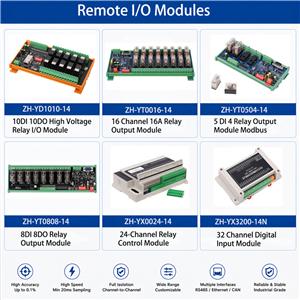
Remote IO Modules Catalog
Industrial IO Modules provide reliable signal acquisition and control so
-
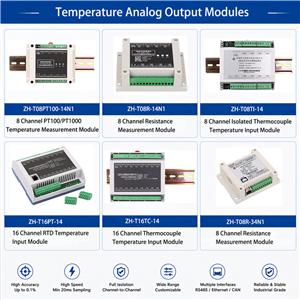
Temperature Analog Output Modules Catalog
High-performance temperature analog output modules for RTD and thermocou
-
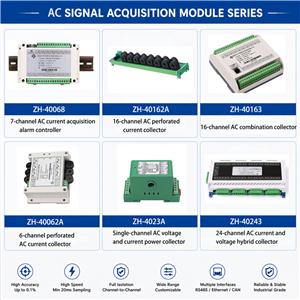
AC Signal Acquisition Modules Voltage Current Monitoring
AC signal acquisition modules for voltage, current, power, energy, and f
ARTICLES
- AC/DC Universal Data Acquisition Module: A Reliable Solution for Data Center Load Aging Testing
- DC Current Monitoring for Solar Combiner Boxes | PV String Current Monitoring Solution
- Current Monitoring Solutions for PV Power Plants
- How to Choose a Data Acquisition Module
- RS485 Modbus Data Acquisition Guide
Contact Us
| Contact: | Maggie Xian |
|---|---|
| Phone: | 8613450868908 |
| Email: | maggie@jshelectronic.com |
| Address: | Plant No. 2, Lijincheng Science and Technology Park, Jihua Road, Longhua Street, Longhua District, Shenzhen City, Guangdong Province |