
Power Acquisition Modules in Smart Factories
Power Acquisition Modules in Smart Factories: Enabling Intelligent Energy Management
IntroductionWith the rapid development of Industry 4.0 and Industrial IoT (IIoT), traditional manufacturing factories are transforming into smart factories with digital monitoring, automated control, and intelligent energy management systems.
Electric energy is one of the most important production resources in modern factories. However, many factories still face challenges such as:
*Lack of real-time electricity consumption data
*Difficulty identifying high-energy-consuming equipment
*Inability to analyze production energy efficiency
*Limited integration between electrical systems and industrial control platforms
A Power Acquisition Module provides an effective solution by collecting voltage, current, power, energy consumption, and other electrical parameters in real time, allowing factories to build a complete energy monitoring system.
What Is a Power Acquisition Module?
A Power Acquisition Module is an industrial data acquisition device designed to measure and transmit electrical parameters from power systems.
It typically collects:
*AC voltage
*AC current
*Active power
*Reactive power
*Apparent power
*Power factor
*Frequency
*Energy consumption (kWh)
The collected data can be transmitted through industrial communication protocols such as:
*RS485 Modbus RTU*Modbus TCP Ethernet
*CAN Bus
*Industrial IoT gateways
This allows seamless connection with:
*PLC systems
*SCADA software
*MES systems
*Energy management platforms
*Cloud monitoring systems
Pls check our products for reference:
https://www.jshelectronic.com/ac-power-monitoring-modules.html
1. Real-Time Energy Monitoring
In traditional factories, electricity meters are usually installed at the main power distribution level.
However, managers often cannot know:
*Which machine consumes the most energy?
*When does energy consumption peak?
*Which production line has abnormal power usage?
By installing power acquisition modules on different machines or production lines, factories can obtain real-time electrical data.
Example:
A factory can monitor:
*CNC machines
*Injection molding machines
*Welding equipment
*Motors
*Compressors
*HVAC systems
and analyze their energy consumption individually.
2.Improve Energy Efficiency and Reduce Operating Costs
Energy costs represent a significant portion of manufacturing expenses.
Power acquisition modules help factories identify:
*Idle equipment running unnecessarily
*Abnormal current consumption
*Motor overload conditions
*Energy waste during non-production periods
Through historical data analysis, companies can optimize production schedules and reduce electricity costs.
For example:
A factory discovers that a production line consumes 30% more electricity during standby mode. By adjusting equipment operation strategies, unnecessary energy consumption can be reduced.
3. Equipment Condition Monitoring and Predictive Maintenance
Electrical parameters provide important information about equipment health.
Abnormal electrical signals may indicate:
*Motor aging
*Bearing problems
*Overload operation
*Insulation degradation
*Electrical faults
By continuously monitoring current and power changes, maintenance teams can detect problems before equipment failure occurs.
This supports:
*Predictive maintenance
*Reduced downtime
*Improved production reliability
4.Integration with Industrial Automation Systems
Modern smart factories require communication between electrical devices and automation systems.
Power acquisition modules with Modbus communication can easily integrate with existing industrial networks.
Typical architecture:
Industrial Equipment
|
Current Transformer / Voltage Sensor
|
Power Acquisition Module
|
RS485 Modbus / Ethernet
|
PLC / SCADA / MES System
|
Energy Management Platform
This architecture enables centralized monitoring and intelligent control.
Applications of Power Acquisition Modules in Smart Factories
1.Production Line Energy Monitoring
Manufacturing production lines contain many machines with different power requirements.
Power acquisition modules can monitor each production unit separately.
Applications:
*Automotive manufacturing
*Electronics factories
*Mechanical processing plants
*Semiconductor production
Benefits:
*Compare energy efficiency between production lines
*Optimize machine operation
*Reduce production costs
2.Motor and Pump Monitoring
Motors are among the largest electricity consumers in factories.
Power acquisition modules can monitor:
*Motor current
*Voltage balance
*Power factor
*Running status
Applications:
*Water pumps
*Air compressors
*Conveyor systems
*Fans
By analyzing current fluctuations, engineers can identify abnormal operating conditions.
3.Industrial Energy Management Systems
Many factories are implementing energy management systems according to ISO 50001 requirements.
Power acquisition modules provide the basic data source for:
*Energy statistics
*Carbon emission calculations
*Production energy analysis
*Cost management
4.Data Centers and Server Rooms
Data centers require continuous monitoring of electrical loads.
Power acquisition modules help monitor:
*Rack power consumption
*UPS output
*Distribution cabinets
*Cooling system loads
Benefits:
*Prevent overload
*Improve energy efficiency
*Enhance system reliability
Key Features of Industrial Power Acquisition Modules
A professional industrial power acquisition module usually includes:
Multi-Channel Measurement
Supports multiple channels for:
*Multiple machines
*Multiple circuits
*Multiple production areas
Reducing installation costs and system complexity.
High Accuracy Measurement
Industrial applications require accurate measurement.
Typical features:
*High-resolution ADC
*Industrial-grade MCU
*Stable signal processing
*Calibration function
Industrial Communication
Common communication interfaces:
RS485 Modbus RTU
Advantages:
*Long-distance communication
*Strong anti-interference capability
*Widely used in factories
Ethernet Modbus TCP
Advantages:
*Fast communication
*Easy integration with industrial networks
Electrical Isolation Protection
Industrial environments often have:
*High voltage interference
*Motor noise
*Switching power interference
Isolation design improves:
*Safety
*Measurement accuracy
*System stability
How to Choose a Power Acquisition Module for Smart Factory Applications?
When selecting a suitable module, engineers should consider:
1. Measurement Type
Determine whether you need:
*Single-phase power monitoring
*Three-phase power monitoring
*AC current monitoring
*DC power monitoring
2.Number of Channels
Choose according to monitoring points.
Examples:
*Small equipment monitoring: 1-4 channels
*Production line monitoring: 8-24 channels
*Large factory energy monitoring: multiple distributed modules
3. Communication Protocol
Consider compatibility with existing systems:
*Modbus RTU RS485
*Modbus TCP Ethernet
*CAN
4.Input Sensor Type
Common options:
*Current transformer (CT)
*Hall current sensor
*Voltage transformer
Power Acquisition Module Application Example
Smart Factory Energy Monitoring System
A typical solution:
Step 1: Install current transformers on production equipment
↓
Step 2: Connect sensors to multi-channel power acquisition modules
↓
Step 3: Transfer data through RS485 Modbus
↓
Step 4: PLC or SCADA system collects electrical data
↓
Step 5: Energy management software analyzes consumption
Final results:
*Real-time power monitoring
*Energy consumption reports
*Equipment efficiency analysis
*Fault warning
Future Development of Power Monitoring in Smart Factories
With the development of Industrial IoT and AI technology, power acquisition modules will become more intelligent.
Future trends include:
*Cloud-based energy monitoring
*AI energy optimization
*Wireless industrial sensors
*Digital twin factory models
*Automatic energy-saving control
Electrical data will become a key resource for improving manufacturing efficiency.
FAQ
1.What is the difference between a power meter and a power acquisition module?
A power meter usually focuses on local measurement and display.
A power acquisition module focuses on:
*Multi-channel data collection
*Industrial communication
*System integration
It is more suitable for automated monitoring systems.
2.Can a power acquisition module connect to PLC?
Yes.
Most industrial power acquisition modules support:
*RS485 Modbus RTU
*Modbus TCP
They can directly communicate with PLC, SCADA, and MES systems.
3.Can power acquisition modules monitor multiple machines?
Yes.
Multi-channel modules can monitor multiple circuits or machines simultaneously, reducing installation costs.
4.Are power acquisition modules suitable for Industry 4.0 applications?
Yes.
They provide the electrical data foundation required for:
*Smart factories
*Industrial IoT
*Energy management
*Digital manufacturing
Conclusion
Power acquisition modules are becoming an essential component of smart factory infrastructure.
By collecting real-time electrical data and integrating with industrial automation systems, they help manufacturers:
*Reduce energy consumption
*Improve equipment reliability
*Optimize production efficiency
*Build intelligent energy management platforms
For factories moving toward Industry 4.0, accurate and reliable power data acquisition is the foundation of digital transformation.
Please Feel free to give your inquiry in the form below.We will reply you in 24 hours.
CATALOG
-
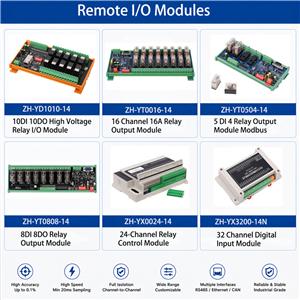
Remote IO Modules Catalog
Industrial IO Modules provide reliable signal acquisition and control so
-
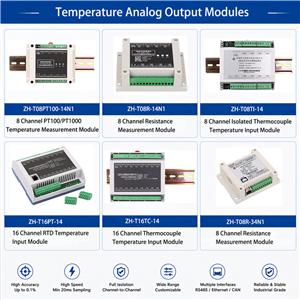
Temperature Analog Output Modules Catalog
High-performance temperature analog output modules for RTD and thermocou
-
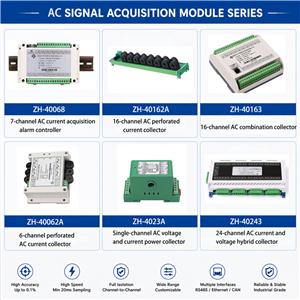
AC Signal Acquisition Modules Voltage Current Monitoring
AC signal acquisition modules for voltage, current, power, energy, and f
ARTICLES
- AC/DC Universal Data Acquisition Module: A Reliable Solution for Data Center Load Aging Testing
- DC Current Monitoring for Solar Combiner Boxes | PV String Current Monitoring Solution
- Current Monitoring Solutions for PV Power Plants
- How to Choose a Data Acquisition Module
- RS485 Modbus Data Acquisition Guide
Contact Us
| Contact: | Maggie Xian |
|---|---|
| Phone: | 8613450868908 |
| Email: | maggie@jshelectronic.com |
| Address: | Plant No. 2, Lijincheng Science and Technology Park, Jihua Road, Longhua Street, Longhua District, Shenzhen City, Guangdong Province |