
How to Select a Split Core Current Transformer
Split core current transformers (CTs) have become one of the most popular current sensing solutions for industrial automation, energy monitoring, smart buildings, photovoltaic systems, and electrical power management. Unlike traditional solid-core CTs, split core current transformers can be installed without disconnecting existing cables, making installation safer, faster, and more cost-effective.
However, selecting the right split core CT involves much more than choosing a current range. Engineers must consider accuracy, output signal, aperture size, installation environment, burden, and application requirements.
This guide explains everything you need to know before choosing a split core current transformer.
Pls check our products for reference:
https://www.jshelectronic.com/
What Is a Split Core Current Transformer?
A split core current transformer is a current sensor with an opening magnetic core that allows it to be installed around an existing conductor without disconnecting the wiring.
Unlike conventional current transformers, split core CTs significantly reduce installation time and system downtime.
Typical Applications
*Industrial power monitoring
*Building Energy Management Systems (BEMS)
*Solar PV monitoring
*Motor current monitoring
*Generator monitoring
*Distribution panels
*Smart factories
*EV charging stations
*Power quality monitoring
Advantages of Split Core Current Transformers
Step 1: Determine the Primary Current
Feature
Split Core CT
Solid Core CT
Installation
No cable disconnection
Cable removal required
Maintenance
Easy replacement
Difficult
Downtime
Minimal
Often required
Retrofit Projects
Excellent
Poor
Safety
High
Moderate
Installation Speed
Fast
Slow
The first specification to determine is the maximum current flowing through the conductor.
Common ratings include:
Always select a CT whose rated current is slightly higher than the normal operating current.
Current Range
Typical Application
5A–50A
Small equipment
100A
Distribution circuits
200A
Commercial buildings
400A
Industrial panels
600A
Heavy machinery
800A
Power distribution
1000A
Utility applications
2000A+
High-current busbars
Operating Current = 180A
Recommended CT = 200A
Step 2: Choose the Correct Aperture Size
The window size (inside diameter) must be larger than the cable or busbar.
Typical aperture sizes include:
Avoid selecting an oversized CT because excessive air gaps can reduce measurement accuracy.
Window Size
Suitable For
16 mm
Small cables
24 mm
Building wiring
36 mm
Medium power cables
50 mm
Industrial cables
80 mm
Busbars
100 mm
Large conductors
Step 3: Select the Required Accuracy Class
Accuracy depends on the application.
For industrial automation, Class 0.5 is usually sufficient.
Accuracy
Typical Application
1.0
Basic monitoring
0.5
Energy monitoring
0.2
Revenue metering
0.1
Laboratory measurement
Step 4: Select the Output Signal
Different monitoring devices require different CT outputs.
Common outputs include:
Laboratory measurement:
*5A
*1A*333mV
*100mV
*0–1V
*4–20mA
*0–5V
*Custom voltage outputs
Current Output (1A / 5A)
Suitable for:
*Energy meters
*Protection relays
*Power analyzers
Advantages:
*Industry standard
*High accuracy
Voltage Output (333mV)
Suitable for:
*Data acquisition modules
*PLC analog inputs
*Building automation
Advantages:
*Safe low-voltage signal
*No external burden resistor
*Easy installation
Analog Output (4-20mA)
Suitable for:
*Industrial PLC
*SCADA
*Long-distance transmission
Advantages:
*Excellent anti-interference capability
Step 5: Check Frequency Range
Most industrial applications use:50 Hz and 60 Hz
Some high-frequency applications require CTs capable of measuring up to several kHz.
Examples:
*Variable Frequency Drives (VFD)
*Harmonic analysis
*Power quality analyzers
Step 6: Consider Installation Environment
Environmental factors greatly affect long-term reliability.
Important considerations include:
*Indoor or outdoor installation
*Operating temperature
*Humidity
*Dust
*Vibration
*Electromagnetic interference
*UV resistance
Industrial-grade split core CTs typically support operating temperatures from -25°C to +70°C.
Step 7: Evaluate Mechanical Design
A good split core CT should include:
*Strong locking mechanism
*Precision magnetic core alignment
*Durable enclosure
*Flame-retardant housing
*Easy cable installation
*Reliable hinge design
A poor mechanical design can introduce air gaps that reduce measurement accuracy.
Step 8: Consider Isolation and Safety
Industrial environments require adequate electrical isolation.
Look for:
*High dielectric strength
*Reinforced insulation
*CE certification
*RoHS compliance
*Industrial EMC performance
Step 9: Match the CT with Your Monitoring System
Different systems require different outputs.
|
Monitoring Device |
Recommended Output |
|
PLC |
4–20mA / 0–5V |
|
Data Acquisition Module |
333mV / mA |
|
Energy Meter |
1A / 5A |
|
SCADA System |
RS485 module + CT |
|
IoT Gateway |
Analog or digital acquisition module |
Avoid these common errors:
❌ Selecting an aperture that is too small
❌ Choosing an excessively large CT
❌ Ignoring accuracy requirements
❌ Using the wrong output signal
❌ Forgetting burden resistor compatibility
❌ Installing near strong magnetic fields
❌ Using indoor CTs outdoors
Typical Industrial Applications
Split core current transformers are widely used in:
*Industrial automation
*Smart manufacturing
*Power distribution
*Renewable energy
*Solar PV combiner boxes
*EV charging infrastructure
*Building energy management
*Data centers
*Generator monitoring
*HVAC systems
Why Choose JSH Electronic Split Core Current Transformers?
JSH Electronic provides high-performance split core current transformers designed for industrial monitoring and automation.
Features
*Current ranges up to 2000A
*Accuracy classes 0.1 / 0.2 / 0.5
*Multiple aperture sizes
*1A, 5A, mA, mV outputs
*Fast, non-invasive installation
*Excellent linearity
*CE & RoHS compliant
*OEM & ODM supported
Whether you are upgrading an existing power monitoring system or designing a new energy management solution, our split core CTs offer reliable performance and easy installation.
FAQ1.Can I install a split core CT without disconnecting the cable?
Yes. This is the biggest advantage of split core current transformers.
2.Which output is best for PLC systems?
Most PLC analog input modules work well with 4–20mA, 0–5V, or 333mV outputs.
3.Are split core CTs as accurate as solid core CTs?
High-quality split core CTs can achieve Class 0.2 or even Class 0.1 accuracy when properly installed.
4.How do I select the window size?
Measure the outside diameter of the cable or busbar and choose a CT with a slightly larger aperture.
5.Can split core CTs be used for solar monitoring?
Yes. They are widely used in PV combiner boxes, inverters, and string current monitoring systems.
Conclusion
Selecting the right split core current transformer involves balancing electrical specifications, mechanical design, accuracy requirements, and installation conditions. By carefully evaluating current rating, aperture size, output type, environmental conditions, and system compatibility, engineers can ensure accurate, reliable, and long-lasting current measurement.
Whether you are building an energy monitoring system, upgrading industrial automation equipment, or implementing solar power monitoring, choosing a high-quality split core current transformer is essential for achieving dependable performance and simplifying installation.
CATALOG
-
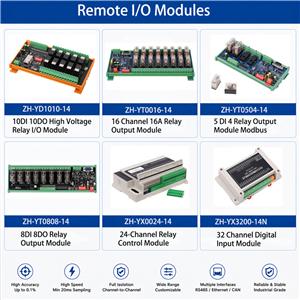
Remote IO Modules Catalog
Industrial IO Modules provide reliable signal acquisition and control so
-
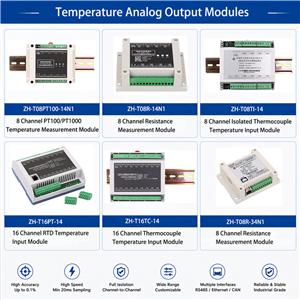
Temperature Analog Output Modules Catalog
High-performance temperature analog output modules for RTD and thermocou
-
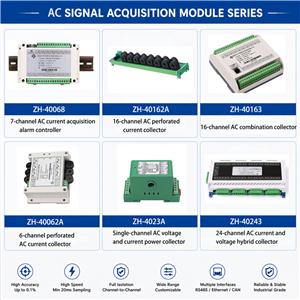
AC Signal Acquisition Modules Voltage Current Monitoring
AC signal acquisition modules for voltage, current, power, energy, and f
ARTICLES
- AC/DC Universal Data Acquisition Module: A Reliable Solution for Data Center Load Aging Testing
- DC Current Monitoring for Solar Combiner Boxes | PV String Current Monitoring Solution
- Current Monitoring Solutions for PV Power Plants
- How to Choose a Data Acquisition Module
- RS485 Modbus Data Acquisition Guide
Contact Us
| Contact: | Maggie Xian |
|---|---|
| Phone: | 8613450868908 |
| Email: | maggie@jshelectronic.com |
| Address: | Plant No. 2, Lijincheng Science and Technology Park, Jihua Road, Longhua Street, Longhua District, Shenzhen City, Guangdong Province |