
Voltage Acquisition Module vs PLC Analog Input
In industrial automation, voltage measurement is essential for monitoring equipment status, power systems, renewable energy installations, battery storage, and manufacturing processes. Engineers often face an important question:
Should you use a PLC analog input or a dedicated voltage acquisition module?
Although both solutions measure voltage signals, they are designed for different purposes. Understanding their differences helps improve measurement accuracy, system scalability, and long-term maintenance costs.
This article compares both technologies from practical engineering perspectives.
What Is a PLC Analog Input?
A PLC analog input is an integrated input channel inside a Programmable Logic Controller that converts analog voltage signals into digital values for logic control.
Typical supported signals include:0–10V,±10V,1–5V,0–5V,4–20mA (with current input cards)
PLC analog inputs are mainly designed for:Machine automation,Process control,Closed-loop control,Equipment interlocking
Their primary purpose is controlling industrial equipment rather than high-density data acquisition.
What Is a Voltage Acquisition Module?
A voltage acquisition module is an independent data acquisition (DAQ) device specifically designed for voltage measurement and remote monitoring.
Unlike PLC input cards, acquisition modules focus on:
*High-precision measurement
*Multi-channel monitoring
*Remote communication
*Long-distance data transmission
*Cloud and SCADA integration
Most industrial voltage acquisition modules support:
*RS485 Modbus RTU
*Modbus TCP Ethernet
*MQTT
*OPC UA
*IoT gateways
They are widely used in:
*Power monitoring
*Solar PV systems
*Battery energy storage
*Data centers
*Smart factories
*Environmental monitoring
Voltage Acquisition Module vs PLC Analog Input
Main Purpose
Accuracy Comparison
Feature
Voltage Acquisition Module
PLC Analog Input
Data acquisition
Machine control
Installation
Independent device
PLC expansion card
Measurement Accuracy
High
Medium
Channel
Density 8–32+ channels
Usually 4–16 channels
Communication
RS485, Ethernet, Modbus TCP
Internal PLC Bus
Remote Monitoring
Excellent
Limited
Data Logging
Built-in or SCADA
PLC Program Required
Expandability
Very High
Depends on PLC Slots
Cost for Large Systems
Lower
Higher
One of the biggest differences is measurement accuracy.
Dedicated voltage acquisition modules usually feature:
*24-bit or 32-bit ADC
*Better temperature stability
*Electrical isolation
*Low-noise signal conditioning
PLC analog modules prioritize reliable machine control rather than laboratory-level precision.
For applications such as:
*Energy management
*Battery monitoring
*Precision voltage recording
a dedicated acquisition module often provides significantly better performance.
Scalability for Large Monitoring Systems
Modern factories may require monitoring:
*64 voltage signals
*128 battery cells
*Hundreds of PV strings
*Multiple distribution cabinets
Expanding a PLC with numerous analog input cards quickly becomes expensive.
Voltage acquisition modules can simply be daisy-chained using RS485 Modbus, allowing dozens or even hundreds of channels to be monitored through a single communication network.
This architecture reduces wiring complexity and lowers overall system cost.
Communication Flexibility
PLC analog inputs normally communicate internally with the PLC CPU.
Voltage acquisition modules often support multiple industrial protocols:
*Modbus RTU
*Modbus TCP
*Ethernet
*RS485
*MQTT
*OPC UA
This makes them easier to integrate with:
*SCADA software
*Cloud platforms
*MES systems
*Industrial IoT gateways
For distributed systems, installation becomes much easier using remote acquisition modules.
Instead of routing every analog signal back to the PLC cabinet:
*Install acquisition modules close to sensors.
*Transmit data through RS485 or Ethernet.
*Reduce analog wiring length.
*Improve noise immunity.
*Simplify maintenance.
This architecture is particularly useful in:
*Solar farms
*Water treatment plants
*Large factories
*Energy storage systems
Cost ComparisonFor a small machine with only four voltage inputs, a PLC analog card is often the most economical solution.
However, as the number of channels increases, acquisition modules become increasingly cost-effective because they offer:
*More channels per device
*Lower wiring costs
*Easier expansion
*Reduced PLC hardware requirements
For large-scale monitoring projects, the total system cost is usually lower.
Typical Applications
PLC Analog Input
Ideal for:
*Packaging machines
*CNC equipment
*Injection molding machines
*Conveyor systems
*Industrial automation
Voltage Acquisition Module
Better suited for:
*Solar PV monitoring
*Battery energy storage systems (BESS)
*Electrical distribution monitoring
*Smart buildings
*Data centers
*Industrial energy management
*Environmental monitoring
*Remote substations
When Should You Choose a Voltage Acquisition Module?
A dedicated voltage acquisition module is the better option if your project requires:
*High measurement accuracy
*More than 16 analog channels*Remote monitoring
*Long-distance communication
*SCADA integration
*IoT connectivity
*Easy future expansion
*Energy data analysis
When Is a PLC Analog Input Enough?
Choose PLC analog inputs if:
*The machine already uses a PLC.
*Only a few analog channels are required.
*The primary goal is equipment control.
*Remote monitoring is not necessary.
*Measurement precision is not critical.
Conclusion
Both PLC analog inputs and voltage acquisition modules play important roles in industrial automation, but they serve different objectives.
If your focus is machine control, a PLC analog input provides a simple and reliable solution.
If your goal is high-accuracy voltage monitoring, remote data collection, or scalable industrial IoT systems, a dedicated voltage acquisition module delivers greater flexibility, better communication capabilities, and lower overall cost for large installations.
Choosing the right solution depends on your application's size, accuracy requirements, communication architecture, and future expansion plans.
FAQ
1.Can a voltage acquisition module replace PLC analog inputs?
Yes. In many monitoring applications, voltage acquisition modules can collect data independently and transmit it to PLCs, SCADA systems, or cloud platforms via Modbus or Ethernet.
2.Are voltage acquisition modules more accurate?
Generally, yes. Dedicated acquisition modules often use higher-resolution ADCs and better signal conditioning circuits than standard PLC analog input cards.
3.Which solution is better for solar PV monitoring?
Voltage acquisition modules are usually preferred because they support multiple channels, long-distance communication, and easy integration with SCADA or energy management systems.
4.Can both solutions work together?
Absolutely. Many industrial systems use PLCs for control while using dedicated acquisition modules for high-density monitoring and data logging.
Pls check our website for more reference:
https://www.jshelectronic.com/
CATALOG
-
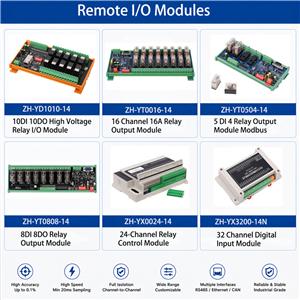
Remote IO Modules Catalog
Industrial IO Modules provide reliable signal acquisition and control so
-
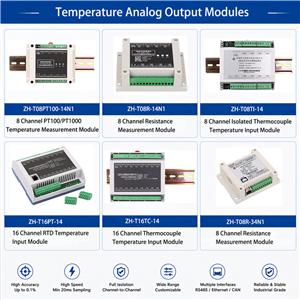
Temperature Analog Output Modules Catalog
High-performance temperature analog output modules for RTD and thermocou
-
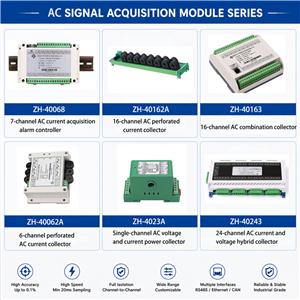
AC Signal Acquisition Modules Voltage Current Monitoring
AC signal acquisition modules for voltage, current, power, energy, and f
ARTICLES
- AC/DC Universal Data Acquisition Module: A Reliable Solution for Data Center Load Aging Testing
- DC Current Monitoring for Solar Combiner Boxes | PV String Current Monitoring Solution
- Current Monitoring Solutions for PV Power Plants
- How to Choose a Data Acquisition Module
- RS485 Modbus Data Acquisition Guide
Contact Us
| Contact: | Maggie Xian |
|---|---|
| Phone: | 8613450868908 |
| Email: | maggie@jshelectronic.com |
| Address: | Plant No. 2, Lijincheng Science and Technology Park, Jihua Road, Longhua Street, Longhua District, Shenzhen City, Guangdong Province |