
Current Transformer vs Hall Effect Sensor
Accurate current measurement is essential for modern industrial automation, energy management, power quality analysis, and renewable energy systems. Whether you're designing a PLC control cabinet, monitoring electrical equipment, or building a solar photovoltaic (PV) monitoring system, selecting the right current sensing technology directly affects measurement accuracy, system reliability, and long-term maintenance costs.
Two of the most widely used technologies are Current Transformers (CTs) and Hall Effect Sensors. Although both are designed to measure electrical current, they operate on completely different principles and are suited for different applications.
This guide compares Current Transformers and Hall Effect Sensors in detail, helping engineers, system integrators, and equipment manufacturers choose the best solution for their projects.
What Is a Current Transformer (CT)?
A Current Transformer (CT) is an electromagnetic device that converts a large AC current into a smaller, proportional current that can be safely measured by meters, relays, or data acquisition systems.
A CT operates based on electromagnetic induction, making it suitable only for alternating current (AC).
Typical secondary outputs include:5 A,1A,333mV,100mV,Custom low-voltage outputs
CTs are commonly installed around a conductor without interrupting the circuit, making installation simple and safe.
Advantages of Current Transformers
1.High measurement accuracy
2.Excellent electrical isolation
3.No external power supply required
4.Low cost
5.Long service life
6.Minimal maintenance
7.Ideal for high-current measurement
8.Easy installation with split-core designs
Limitations of Current Transformers
1.Cannot measure DC current
2.Accuracy decreases at very low current
3.Sensitive to magnetic saturation
4.Open secondary circuit may generate dangerous voltages
5.Limited frequency response
What Is a Hall Effect Sensor?
A Hall Effect Sensor measures current by detecting the magnetic field generated by the conductor. It is based on the Hall Effect, discovered by Edwin Hall in 1879.
Unlike CTs, Hall sensors can measure both AC and DC current because they respond directly to magnetic field strength rather than electromagnetic induction.
Hall sensors are widely used in:
*Battery Energy Storage Systems (BESS)
*Electric Vehicles (EV)
*Solar inverters
*Motor drives
*DC power supplies
*Robotics
*Industrial automation
Advantages of Hall Effect Sensors
*Measures both AC and DC current
*Wide bandwidth
*Excellent dynamic response
*Suitable for high-frequency signals
*No magnetic saturation under normal operation
*Compact size
*High electrical isolation
*Ideal for bidirectional current measurement
Limitations of Hall Effect Sensors
*Higher cost than CTs
*Requires external power supply
*More sensitive to temperature changes
*Offset drift over time
*More complex electronic circuitry
Current Transformer vs Hall Effect Sensor
Feature
Current Transformer
Hall Effect Sensor
AC Measurement
Excellent
Excellent
DC Measurement
Not Supported
Supported
Isolation
Excellent
Excellent
Accuracy
Very High
High
Cost
Low
Medium to High
External Power
Not Required
Required
Frequency Response
Medium
Wide
Installation
Easy
Easy
Maintenance
Very Low
Low
Long-Term Stability
Excellent
Good
For traditional industrial power systems operating at 50 Hz or 60 Hz, Current Transformers remain the preferred solution because they offer:
*High accuracy
*Low cost
*Long lifespan
*Excellent reliability
Applications include:
*Factory power monitoring
*Distribution panels
*Energy meters
*Three-phase power analyzers
*Smart power monitoring systems
DC Current Measurement
Because electromagnetic induction only occurs with changing magnetic fields, CTs cannot measure direct current.
Hall Effect Sensors are therefore the preferred choice for:
*Solar PV strings
*Battery monitoring
*EV charging stations
*UPS battery systems
*DC microgrids
*Hydrogen energy systems
Accuracy Comparison
Current Transformers generally provide superior accuracy for steady-state AC measurement.
Typical accuracy classes include:0.1%,0.2%,0.5%,1.0%
Hall sensors typically provide:±0.5%,±1%,±2%
However, closed-loop Hall Effect Sensors can achieve very high precision for demanding applications.
Isolation Performance
Both technologies provide galvanic isolation between the primary conductor and the measurement circuit.
This isolation protects:
*PLC systems
*Data acquisition modules
*Industrial computers
*SCADA systems
*Operators
High-voltage industrial environments require reliable isolation to ensure safety.
Frequency Response
Current Transformers are optimized for power-frequency signals (50/60 Hz) and low-order harmonics.
Hall Effect Sensors can measure:
*DC
*Low-frequency AC
*High-frequency switching currents
*PWM waveforms
*Fast transient currents
This makes Hall sensors ideal for modern power electronics.
Cost Comparison
Generally speaking:
Current Transformers are significantly less expensive.
Reasons include:
*Simple construction
*Mature manufacturing process
*No active electronics
*No power supply
Hall sensors cost more because they include:
*Hall IC
*Signal conditioning circuits
*Amplifiers
*Power management
Industrial Applications
Current Transformer ApplicationsCurrent Transformers are commonly used in:
*Factory automation
*Building energy management
*Switchgear
*Electrical substations
*Generator monitoring
*Distribution cabinets
*Smart meters
*HVAC systems
Hall Effect Sensors are preferred for:
*Solar power plants
*Battery energy storage systems
*Electric vehicles
*Charging stations
*Motor controllers
*Servo systems
*Wind energy
*DC power monitoring
Which Sensor Is Better for Solar PV Systems?
Modern solar PV systems include both AC and DC sections.
DC Side
Recommended:
✅ Hall Effect Current Sensor
Applications:
*String current monitoring
*Combiner box monitoring
*Battery charging
*Energy storage
Recommended:
✅ Current Transformer
Applications:
*Grid export monitoring
*Inverter output monitoring
*Transformer monitoring
*Utility metering
Many photovoltaic monitoring systems therefore combine both technologies.
Integrating Current Sensors with Data Acquisition Modules
Industrial current sensors are often connected to intelligent data acquisition modules via:
*Analog voltage input
*Analog current input
*RS485 Modbus RTU
*Modbus TCP
*CAN Bus
These modules collect current data and transmit it to:
*PLC
*SCADA
*HMI
*Energy Management Systems (EMS)
*Building Management Systems (BMS)
*Cloud IoT platforms
Real-time monitoring enables predictive maintenance, energy optimization, and fault detection.
How to Choose the Right Current Sensor
Before selecting a sensor, consider:
*Is the current AC, DC, or both?
*What is the maximum current?
*Required measurement accuracy
*Installation space
*Isolation requirements
*Communication protocol
*Environmental temperature
*Budget
*Response speed
*Long-term stability
Why Choose JSH Electronic Current Measurement Solutions?
JSH Electronic provides a complete range of industrial current sensing and acquisition products for OEM equipment manufacturers, system integrators, and industrial automation projects.
Our solutions include:
1.Multi-channel current acquisition modules
2.AC current monitoring modules
3.DC current monitoring modules
4.Hall Effect current measurement solutions
5.Current Transformer interfaces
6.RS485 Modbus RTU communication
7.Ethernet Modbus TCP options
8.High-speed sampling
9.Multi-channel synchronization
10.Industrial EMC protection
11.DIN rail mounting
12.OEM & ODM customization
These products are widely used in industrial automation, photovoltaic power plants, battery energy storage systems, smart manufacturing, energy management, and power quality monitoring.
Pls check our products for reference:
https://www.jshelectronic.com/
FAQ
1.Can a Current Transformer measure DC current?
No. Current Transformers rely on electromagnetic induction and only work with alternating current.
2.Why are Hall Effect Sensors used in battery systems?
Battery systems operate with direct current (DC), making Hall Effect Sensors the preferred solution for accurate and isolated current measurement.
3.Which sensor is more accurate?
For standard AC power measurement, Current Transformers generally provide higher accuracy. For DC and dynamic current measurement, closed-loop Hall Effect Sensors offer excellent precision.
4.Which sensor is more economical?
Current Transformers are typically more cost-effective due to their simple construction and passive operation.
Conclusion
Current Transformers and Hall Effect Sensors each play a vital role in modern electrical measurement systems. Current Transformers remain the best choice for cost-effective, high-accuracy AC power monitoring, while Hall Effect Sensors are indispensable for measuring DC current and high-frequency signals in renewable energy, electric vehicles, and advanced industrial automation.
For many modern energy management systems, combining both technologies delivers the most comprehensive monitoring solution.
CATALOG
-
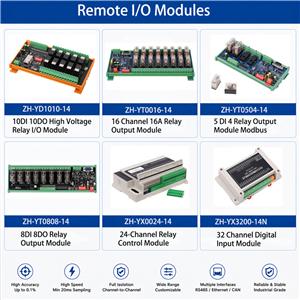
Remote IO Modules Catalog
Industrial IO Modules provide reliable signal acquisition and control so
-
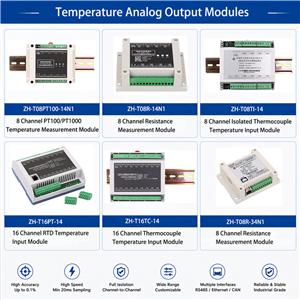
Temperature Analog Output Modules Catalog
High-performance temperature analog output modules for RTD and thermocou
-
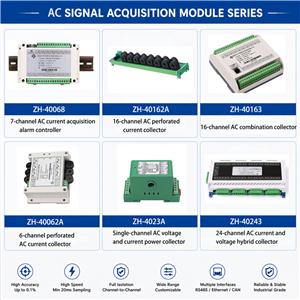
AC Signal Acquisition Modules Voltage Current Monitoring
AC signal acquisition modules for voltage, current, power, energy, and f
ARTICLES
- AC/DC Universal Data Acquisition Module: A Reliable Solution for Data Center Load Aging Testing
- DC Current Monitoring for Solar Combiner Boxes | PV String Current Monitoring Solution
- Current Monitoring Solutions for PV Power Plants
- How to Choose a Data Acquisition Module
- RS485 Modbus Data Acquisition Guide
Contact Us
| Contact: | Maggie Xian |
|---|---|
| Phone: | 8613450868908 |
| Email: | maggie@jshelectronic.com |
| Address: | Plant No. 2, Lijincheng Science and Technology Park, Jihua Road, Longhua Street, Longhua District, Shenzhen City, Guangdong Province |