
What Is Total Harmonic Distortion (THD)?
Electricity is expected to be a perfect sine wave operating at its fundamental frequency—typically 50 Hz or 60 Hz. However, modern electrical systems contain numerous nonlinear loads that distort this waveform. This distortion is known as harmonic distortion, and one of the most important indicators used to evaluate it is Total Harmonic Distortion (THD).
THD has become an essential parameter in industrial automation, energy management, photovoltaic (PV) systems, data centers, manufacturing plants, and commercial buildings because excessive harmonics reduce power quality, increase energy losses, and shorten equipment lifespan.
In this guide, you'll learn everything about THD, including how it is calculated, why it matters, how to measure it, and how modern power acquisition modules can help monitor harmonics in real time.
What Is Total Harmonic Distortion?
Total Harmonic Distortion (THD) is a measurement that indicates how much a voltage or current waveform deviates from an ideal sine wave because of harmonic frequencies.
A perfect AC waveform contains only the fundamental frequency.
For example:
*Fundamental Frequency
*50 Hz
*or 60 Hz
Additional frequencies generated by nonlinear loads are called harmonics.
Examples include:
*3rd harmonic (150 Hz)
*5th harmonic (250 Hz)
*7th harmonic (350 Hz)
*9th harmonic
*11th harmonic
These unwanted frequencies distort the waveform and reduce overall power quality.
Understanding the THD Formula
The mathematical definition of THD is:
THD (%) =
√(V₂² + V₃² + V₄² + … + Vn²)
-------------------------------- ×100%
V₁
Where:
V₁ = Fundamental voltage
V₂~Vn = Harmonic voltages
The same calculation applies to current harmonics.
Lower THD means cleaner power.
Typical values:
Why Is THD Important?
THD
Power Quality
<3%
Excellent
3–5%
Good
5–8%
Acceptable
>8%
Poor
>10%
Serious Harmonic Pollution
High harmonic distortion can cause numerous problems throughout an electrical system.
Increased Equipment Heating
Motors, transformers, generators, and cables generate additional heat when harmonic currents flow through them.
This reduces insulation life and increases maintenance costs.
Higher Energy Consumption
Although harmonics do not perform useful work, they still consume electrical capacity.
Higher THD often results in:
*Increased losses
*Reduced efficiency*Higher electricity bills
Circuit breakers and protective relays may trip unexpectedly because harmonic currents affect measurement accuracy.
PLC and Communication Interference
Industrial communication systems such as:
*Modbus RTU
*RS485
*Ethernet
may experience increased electrical noise in environments with severe harmonic distortion.
Reduced Motor Performance
*Variable Frequency Drives (VFDs) often generate harmonics that cause:
*Motor vibration
*Noise
*Torque pulsation
*Temperature rise
Modern industrial facilities contain many nonlinear loads.
Typical harmonic sources include:
*Variable Frequency Drives (VFD)
*UPS systems
*Switching power supplies
*Solar PV inverters
*EV charging stations
*LED lighting
*Data centers
*Industrial robots
*CNC machines
*Welding equipment
As Industry 4.0 expands, harmonic monitoring is becoming increasingly important.
Voltage THD vs Current THD
Although both measurements describe waveform distortion, they indicate different problems.
Professional power analyzers measure both simultaneously.
Voltage THD
Current THD
Indicates voltage waveform distortion
Indicates harmonic current generated by loads
Depends on system impedance
Depends mainly on nonlinear equipment
Usually monitored at power distribution
Usually monitored at equipment level
How Is THD Measured?
Modern power monitoring devices continuously sample the AC waveform using high-speed analog-to-digital converters.
The waveform is analyzed using Fast Fourier Transform (FFT) technology.
FFT separates the waveform into:
*Fundamental frequency
*3rd harmonic
*5th harmonic
*7th harmonic
*Higher-order harmonics
The device then automatically calculates:
*Voltage THD
*Current THD
*Individual harmonic content
*Total harmonic distortion
Real-time monitoring allows engineers to detect power quality problems before equipment failures occur.
Applications of THD Monitoring
Industrial Automation
Monitor power quality in:
*PLC cabinets
*Production lines
*Automation systems
PV inverters are significant harmonic sources.
Monitoring THD helps:
*Improve inverter efficiency
*Detect abnormal operation
*Protect transformers
*Ensure grid compliance
Servers require stable electrical power.
THD monitoring helps reduce:
*UPS overload
*Transformer heating
*Server downtime
Large HVAC systems, elevators, and LED lighting introduce harmonics into building electrical systems.
Continuous monitoring improves system reliability.
Manufacturing Plants
Factories with welding machines, CNC equipment, and VFD-driven motors benefit from continuous harmonic analysis.
How Power Acquisition Modules Help Measure THD
Modern Modbus Power Acquisition Modules provide comprehensive power quality monitoring, including:
*Voltage
*Current
*Active Power
*Reactive Power
*Apparent Power
*Power Factor
*Frequency
*Energy Consumption
*Voltage THD
*Current THD
*Harmonic Analysis
When connected via RS485 Modbus RTU or Ethernet Modbus TCP, these modules enable remote monitoring through:
*PLC systems
*SCADA software
*Industrial IoT platforms
*Energy Management Systems (EMS)
*Building Management Systems (BMS)
Multi-channel power acquisition modules are especially suitable for monitoring multiple feeders or electrical panels simultaneously.
Best Practices for Reducing THD
To improve power quality:
*Install active harmonic filters.
*Use passive harmonic filters where appropriate.
*Select low-harmonic VFDs.
*Properly size transformers.
*Balance three-phase loads.
*Continuously monitor THD using intelligent power meters.
*Schedule preventive maintenance based on power quality data.
When selecting a power monitoring device, consider:
*THD measurement accuracy
*Sampling speed
*Harmonic order supported
*Modbus RTU/TCP communication
*Multi-channel monitoring capability
*Real-time data logging
*Industrial EMC protection
*Isolation between channels
*Wide operating temperature
*Easy integration with PLC or SCADA
JSH Electronic provides industrial-grade power acquisition modules designed for reliable and accurate electrical monitoring.
Key advantages include:
1.High-precision voltage and current measurement
2.Real-time THD monitoring
3.RS485 Modbus RTU communication
4.Ethernet Modbus TCP options
5.Multi-channel monitoring solutions
6.Fast sampling speed
7.Industrial EMC protection
8.DIN rail installation
9.Easy PLC and SCADA integration
10.OEM & ODM customization available
Our solutions are widely used in industrial automation, photovoltaic systems, smart factories, energy management systems, and electrical equipment manufacturing.
Pls check our products for reference:
https://www.jshelectronic.com/
FAQ
1.What is a good THD value?
Generally, a THD below 5% is considered acceptable for most industrial power systems. Lower values indicate better power quality.
2.What causes high THD?
Common causes include variable frequency drives, UPS systems, LED lighting, switching power supplies, solar inverters, and other nonlinear loads.
3.Can THD damage electrical equipment?
Yes. Excessive harmonic distortion can increase heating, reduce efficiency, shorten equipment lifespan, and cause protection devices to trip unexpectedly.
4.How can THD be monitored continuously?
Using industrial power monitoring modules or power analyzers with Modbus communication enables real-time THD monitoring and remote data collection.
Conclusion
Total Harmonic Distortion (THD) is one of the most important indicators of power quality in modern electrical systems. As industrial automation, renewable energy, and intelligent manufacturing continue to grow, harmonic monitoring has become essential for ensuring reliable, efficient, and safe operation.
By deploying high-precision power acquisition modules with real-time THD measurement and Modbus communication, engineers can identify harmonic issues early, reduce equipment failures, improve energy efficiency, and optimize overall system performance.
CATALOG
-
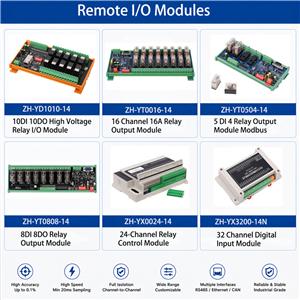
Remote IO Modules Catalog
Industrial IO Modules provide reliable signal acquisition and control so
-
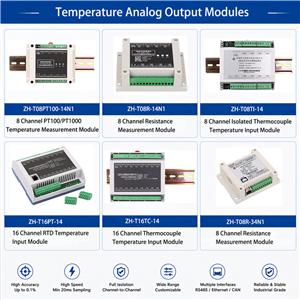
Temperature Analog Output Modules Catalog
High-performance temperature analog output modules for RTD and thermocou
-
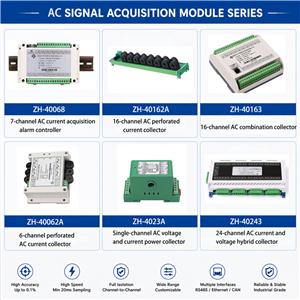
AC Signal Acquisition Modules Voltage Current Monitoring
AC signal acquisition modules for voltage, current, power, energy, and f
ARTICLES
- AC/DC Universal Data Acquisition Module: A Reliable Solution for Data Center Load Aging Testing
- DC Current Monitoring for Solar Combiner Boxes | PV String Current Monitoring Solution
- Current Monitoring Solutions for PV Power Plants
- How to Choose a Data Acquisition Module
- RS485 Modbus Data Acquisition Guide
Contact Us
| Contact: | Maggie Xian |
|---|---|
| Phone: | 8613450868908 |
| Email: | maggie@jshelectronic.com |
| Address: | Plant No. 2, Lijincheng Science and Technology Park, Jihua Road, Longhua Street, Longhua District, Shenzhen City, Guangdong Province |